Skip to content
English

Data Integrity & Governance

From data chaos to data you can trust.

Your data is a strategic asset, but only if you can trust it

Unreliable data slows your team, harms customer service and undermines decisions. Data that is not handled properly also puts you at risk on privacy and security. We check, correct and protect your data, and set the rules and policies that keep it that way.

At a glance

  • Five stages: assess, correct, prevent, protect and set policy
  • History kept: you decide which record wins, and the links between records stay
  • Two purposes: data you can trust and data handled by the rules on privacy and security
  • On its own or inside a project: the assessment is part of every migration and integration

What is data integrity and governance?

Data integrity and governance is checking, correcting and protecting a company's data, and setting the rules and policies that keep it so. It happens when data is unreliable, before a major change such as a migration or an integration, or when privacy, security or company policy require it.

The work ends with data that is correct, complete and protected, and rules your team follows. It serves two purposes: running the business well, with data people can trust, and compliance, with data handled according to the rules on privacy, security and your own policies.

What is bad data costing you?

 Most businesses aren't suffering from a lack of data; they are suffering from data entropy.

  • The cost of friction

    Duplicates and messy entries slow down sales and customer service.

  • The risk of exposure

    Weak data handling leaves gaps in privacy and security.

  • The intelligence gap

    Reports, forecasts and financial models built on inconsistent data cannot be relied on.

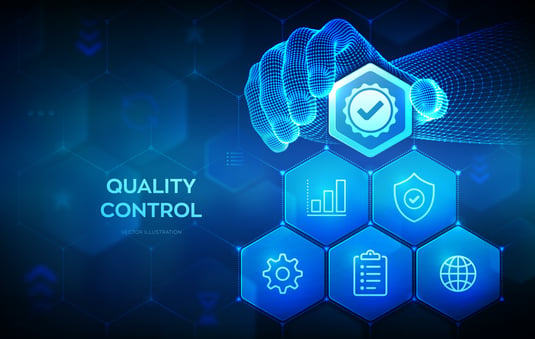
Quality control is the essence of data integrity

How do we work?

Five stages, used together or one at a time, depending on where your data stands.

  1. Assess: we examine the data and report what is wrong, how much, why and what it costs.
  2. Correct: we clean the data in bulk without losing history or the links between records.
  3. Prevent: we set rules in your systems so incomplete or wrong entries are blocked.
  4. Protect: we make personal data safe to use, test and share.
  5. Set policy: we write the rules for your data and put the technical side of GDPR into your systems.

What can we do about your data quality

Those are the main services we offer in regards to data quality management. 

Data Quality Assessment & Technical Due Diligence

We examine your data and report what is wrong, how much, why, what it costs your business and what can be fixed. It is also available on its own, as a data health check or as a neutral due diligence report for an acquisition, an investment, an audit or a legal dispute.

That means missing values, typos and wrong formats, duplicates, outdated records and differences between systems, with the size and impact of each issue.

Typical question: “We don't trust our CRM data. How bad is it really?”

Data Correction & Deduplication

We clean your data in bulk, with scripts built for each case, without losing history or the links between records. You decide which record wins and which format becomes the standard.

That means fixing typos, merging duplicates, standardising names, dates, phone numbers and addresses, matching records across tables and systems, restoring missing links and deleting data with no use.

Typical question: “We have the same customer three times. Can the records be merged without losing history?”

Rules Enforcement & System Configuration

We configure your system so it blocks incomplete or wrong entries, and the data stays clean after it has been fixed.

That means required fields, validation rules, dropdown lists instead of free text, automatic checks on entry, permissions on who can create, change or delete, and views for your team to check its own data.

Typical question: “Can the system refuse a customer without a VAT number?”

Data Governance Policy & Privacy Framework

We write your company's rules for its data: how it is entered, who owns it, how it is protected and how it is checked. We also handle the technical side of GDPR in your systems, alongside your legal advisor or data protection officer.

That means a data quality policy, a privacy policy, GDPR settings in your CRM and systems, training for your team, and a written policy of its own or one built into an ISO quality system.

Typical question: “Our lawyer wrote our GDPR policy. Do our CRM and systems actually follow it?”

Pseudonymisation & Anonymisation

We protect personal data so it can be used or shared safely. Pseudonymisation replaces names and other identifiers with codes that can be reversed; anonymisation removes them permanently.

That means protected data for a migration, for testing a new system with real data, for sharing with partners or for limiting what an AI agent can see, with a report for your data protection officer.

Typical question: “We want to test the new system with real data. Can we do it without exposing customers?”

How is our approach different?

  • You decide, we do the work. You choose which record wins and which format becomes the standard. We carry it out with scripts built for your case.
  • History and links are kept. Correction never means losing the history of a customer or the links between records.
  • Any system that holds business data. HubSpot, Pipedrive, Freshsales, SugarCRM, Salesforce, ERP and accounting systems, SQL databases, Excel and Google Sheets.
  • Business and compliance together. The same work gives you data you can trust and data handled according to the rules.

How does it fit with migration, integration and analysis?

  • Data migration. A data quality assessment is always included. Cleaning and deduplication, and pseudonymisation, are optional and quoted separately.
  • Systems integration. A data quality assessment is always included. Correction and pseudonymisation are optional; when they are needed, they become part of the project and its fee.
  • Data analytics and modeling. When the data needs checking or correcting before analysis, the project runs in two parts: the data quality work first, quoted separately, then the analysis.

Where does this end and other services begin?

  • You want the CRM checked every week, automatically. That is the Data Quality Check Agent, part of AI solutions. It finds gaps and mistakes and sends them to the people responsible; this service corrects data and sets the rules.
  • You want a fresh start of your CRM. That is CRM migration, setup only. Rules added to a CRM already in use, to keep its data clean, belong here.
  • You want your AI agents to answer from your data and knowledge. Preparing that is AI-ready data and knowledge.

How does a project work?

  1. Assessment: we examine your data and report what is wrong, how much, why and what it costs
  2. Decisions: you decide what to fix, which record wins and which format becomes the standard
  3. Correction: we clean the data with scripts built for your case, keeping history and links
  4. Rules and policy: we set the rules in your systems and write the policies, so the data stays correct

Not sure how reliable your data is?
Book a free consultation and tell us about your systems and what worries you about the data.

Frequently asked questions

What is data integrity and governance?

Data integrity and governance is checking, correcting and protecting a company's data, and setting the rules and policies that keep it so. It covers assessing the data, correcting it, setting rules so it stays correct, protecting personal data and writing the company's data policies.

Where do we start?

With a data quality assessment. It tells you what is wrong, how much, why and what it costs, so you can decide what is worth fixing. It is part of every migration and integration, and you can also have it on its own.

Will we lose history when you merge duplicates?

No. Correction keeps the history of each record and the links between records. You decide which record wins and which format becomes the standard, and we carry it out with scripts built for your case.

We cleaned our CRM last year and it is a mess again. How do we stop that?

By setting rules in the system. Required fields, validation rules, dropdown lists instead of free text and automatic checks on entry block incomplete or wrong data when it is entered, so the data stays clean after it has been fixed.

Which systems do you work with?

Any system that holds business data: HubSpot, Pipedrive, Freshsales, SugarCRM, Salesforce, ERP and accounting systems, SQL databases, Excel and Google Sheets.

Is a data quality assessment included in a migration or an integration?

Yes, always. Cleaning and deduplication are optional: in a migration they are quoted separately, and in an integration they become part of the project and its fee when they are needed.

What is the difference between this service and the Data Quality Check Agent?

The Data Quality Check Agent looks for gaps and mistakes in your CRM every week and sends them to the people responsible. It never changes data. Correcting the data and setting the rules that keep it clean belong to data integrity and governance.

Can we test a new system with real data without exposing our customers?

Yes. Pseudonymisation replaces names and other identifiers with codes that can be reversed, and anonymisation removes them permanently. You get protected data for the test and a report for your data protection officer.

Do you handle GDPR compliance?

We handle the technical side of GDPR in your systems: where personal data is held, who can see it, how long it is kept, when it is deleted and how requests for access or deletion are handled. We work alongside your legal advisor or data protection officer.

Can data governance be added to our ISO quality system?

Yes. The data governance policy can be built into an existing ISO quality system, or it can be a written policy of its own.

Do we have to buy all five services together?

No. Each one is offered on its own, or as part of a migration or an integration project.

Related posts

You can find below some related articles from our blog